SUNY, Dr. L. Eudora Pettigrew Women’s History Research Fellowship
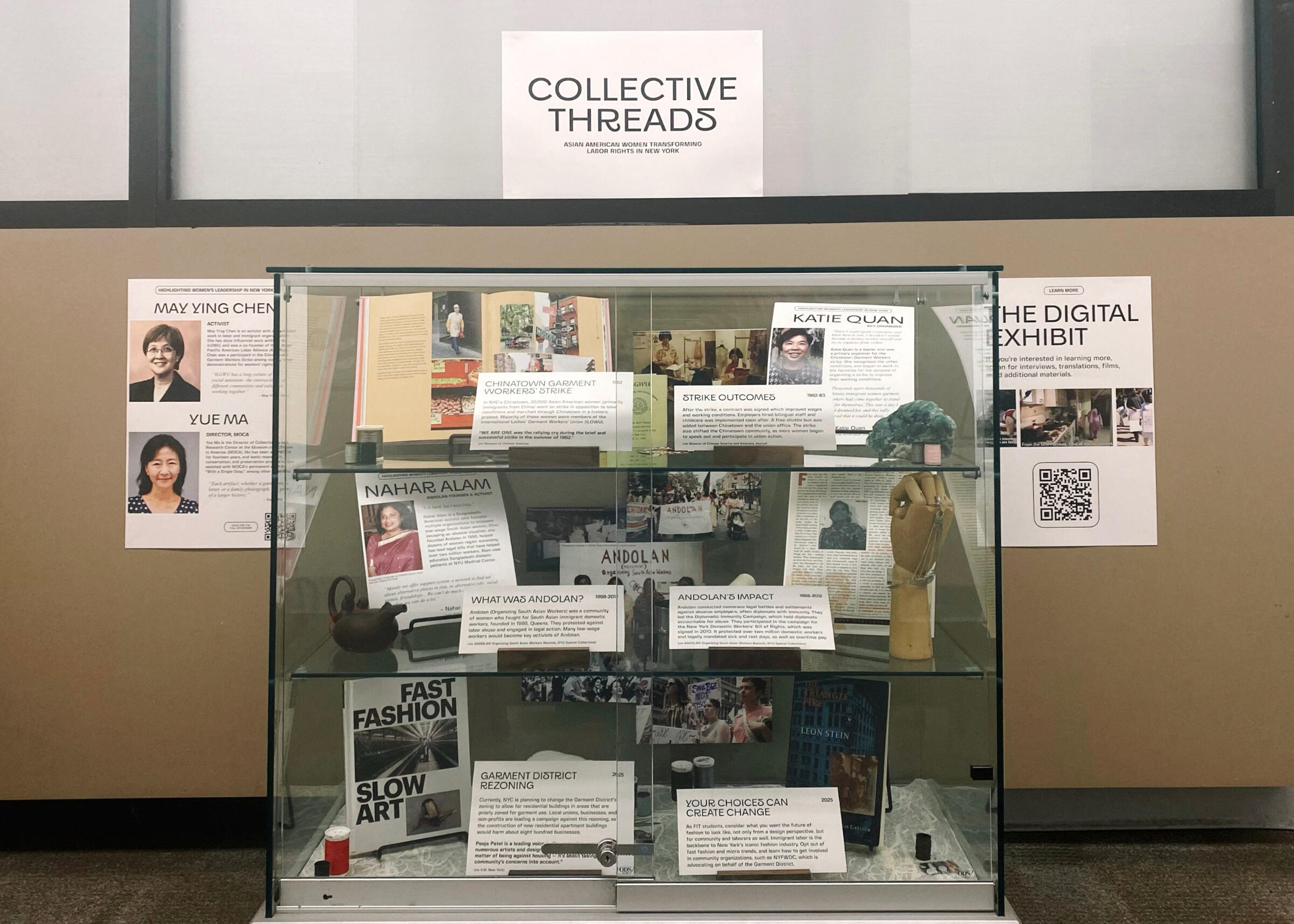
Collective Threads
Asian American Women Transforming Labor Rights in New York
Research and design by Kashi Nanavati
Abstract
How has the erasure of Asian American women’s contributions to New York’s leadership and activism affected current day sentiment? Further, how can we share the underrepresented history of Asian American women’s contributions? This digital exhibit explores the women-led activism of Asian American immigrants in New York City through photography, video, audio, interviews, and documents. My research focuses on Asian American women and their role in shaping New York’s labor rights. Collective Threads explores two movements within this topic, the 1982 Chinatown garment workers’ strike and the Andolan movement, led by women including Katie Quan, May Chen, and Nahar Alam. In America's current political landscape, it is necessary to remember positive social change from immigrant groups. Collective Threads draws attention to the collective bravery of Asian American women in New York through a contemporary narrative lens.
Prior Context: Asian American Labor
Early Labor Exploitation
In America’s early years, immigration from Asia was used to pay workers less than would be required from white labor. The “othering” of Asian Americans was a weaponized view used to push the narrative that Asian Americans were a disposable workforce. Early immigrants from Asia to America were brought over to be perform labor at wages White Americans refused.A group of Irish laborers went on strike in 1870, demanding that their wages be raised from 3 dollars to 4 dollars. Their employers quickly refused their demands and fired the workforce. They were then replaced with Chinese American laborers who were paid only one dollar per day.
“E. L. Godkin of The Nation predicted that the importation of Chinese labor would become a favorite method of resisting white workers' strikes now that American capital had within its reach millions of Chinese ‘ready to work for small wages’" (Takaki).
Image: Portrait of the Tape family (left to right): Joseph Tape, Emily Tape, Frank Tape, Mamie Tape, and Mary Tape, c. 1884. (via History.com)
Introduction of South Asian Labor
South Asian labor was introduced for the same purpose: to lower the cost of labor. When Japanese workers went on strike in 1907, they were fired and replaced with South Asian workers, who were paid $0.25 less per day. The purpose of introducing Asian peoples to America in the country's early days was for labor exploitation. The introduction of South Asian and Chinese labor was a result of British Colonialism, allowing the West to have an easily accessible and dispensable labor force.
“Indian workers [in the United States] were in a different and even more delicate position than their Asian counterparts purely because of the Indians’ subordinate relationship to Britain" (Neogi).
Ayushi Neogi, How Does it Feel to be a Solution?: How South Asian Migration from 1885 to 1923 Created a Modern South Asian “Other” Used to Promote Conservative Rhetoric, 48 UC LAW SF CONST.Q. 508 (2021).
Asian American Women's Labor
Initially, most immigrants from Asia to the USA were male laborers. Soon, women were encouraged to immigrate with their husbands. Women’s labor was associated with work such as sewing, cleaning, homemaking, and domestic work. Women could be paid less than men, and were viewed as a method of keeping the men ‘in-check’. American businessmen believed that if their male laborers had women and children to support, they would be less likely to strike or push back against authority, because they had something to lose.
“Planters themselves saw that Chinese women could be used to control the Chinese laborers…Planters actively encourage the immigration of Chinese women…[Women] were to be paid less than their male counterparts - three dollars rather than four dollars a month” (Takaki).
Takaki, R. T. (1990). Strangers From a Different Shore: A History of Asian Americans. Penguin Books.
Asian Americans in New York City
Chinatown, Manhattan
Chinatown’s first Chinese resident was Ah Ken, who settled on Mott Street and opened a bunkhouse for Chinese immigrants. This developed into NYC’s Chinatown. Many cities have a fabricated “Chinatown” created to promote tourism, whereas NYC’s Chinatown is an organic nucleus of Chinese American immigrants.Inside of the Museum of Chinese America is a small shop called Quong Yuen Shing & Co. The store was open from 1891 to 2003, and was a social hub in Chinatown. Many Chinese Americans could not read or write in English. The shop offered a postal service in which letters would be transcribed by people who worked in the store. When letters were received, they would be read out loud to their recipient if they were unable to read the language.
Jackson Heights, Queens
Jackson Heights in the 1950s was primarily middle-class white families. After the Immigration Act of 1965, there was an influx of South Asian immigrants, primarily from India in the 1970s. It was a popular location for new South Asians to immigrate to because of its Indian grocery stores. Many families moved for proximity to ingredients, similar culture, and language. The neighborhood was later nicknamed Little India.Image: Jackson Heights, Global Town Square, via New York Times
“When I was growing up, it was known as Little India. My mom would come here to get spices.”
– Neha, Interviewed for AAWW (Asian American Writers' Workshop)
Chinatown Garment Workers' Strike (1982)
Prior to the strike
In the early 1980s, there was a large population of Asian American women (primarily Chinese immigrants) working in Chinatown’s garment industry. Garment industry workers were paid by item produced, instead of hourly, allowing employers to pay them well below minimum wage. Reports and interviews mention unsanitary and unsafe conditions, such as rats, dangerous equipment, and tuberculosis.
International Ladies' Garment Workers' Union (ILGWU)
Majority of the participants in the Chinatown Garment Workers' Strike were members of the Local 23-25 branch of the ILGWU. The ILGWU represents women workers in the garment industry, and was founded in the early 20th century after the Triangle Factory Fire.
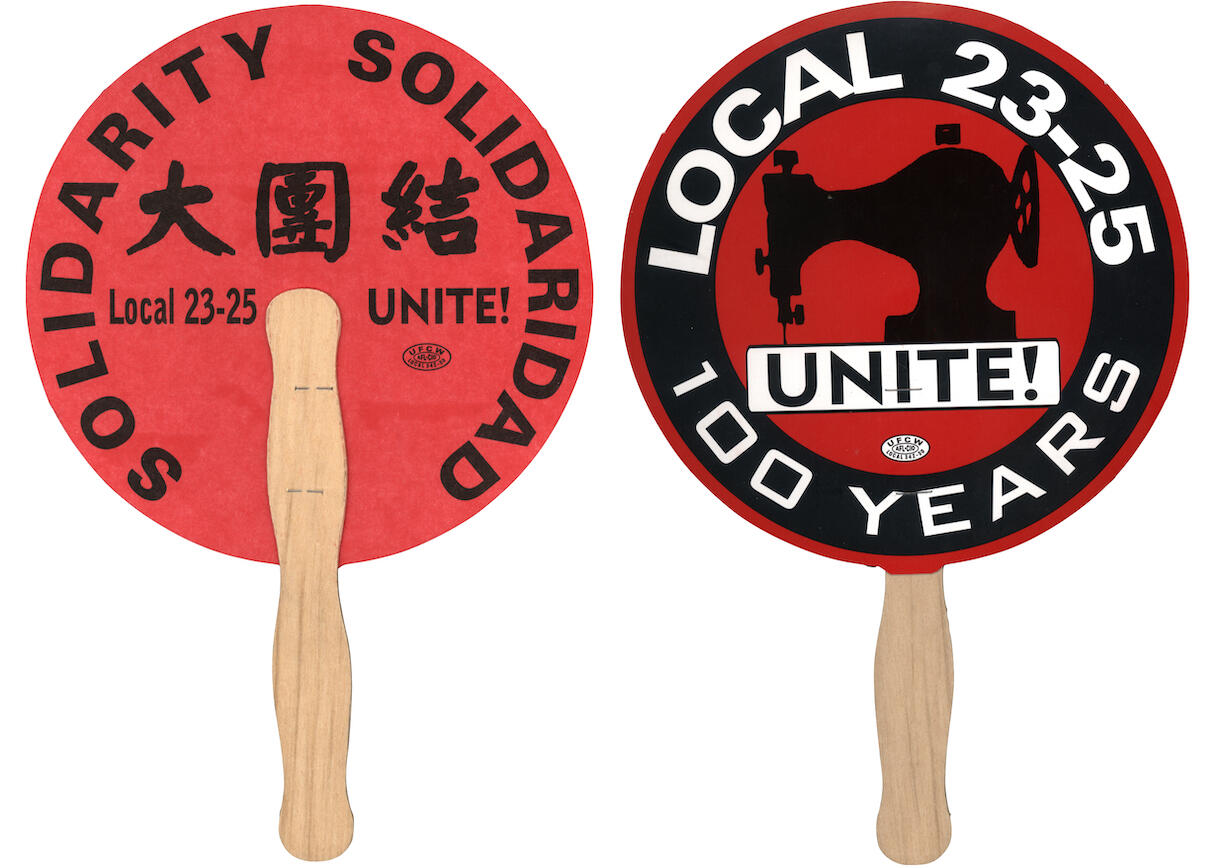
Image: Local 23-25 Unite! 100 Years sign, Museum of Chinese in America
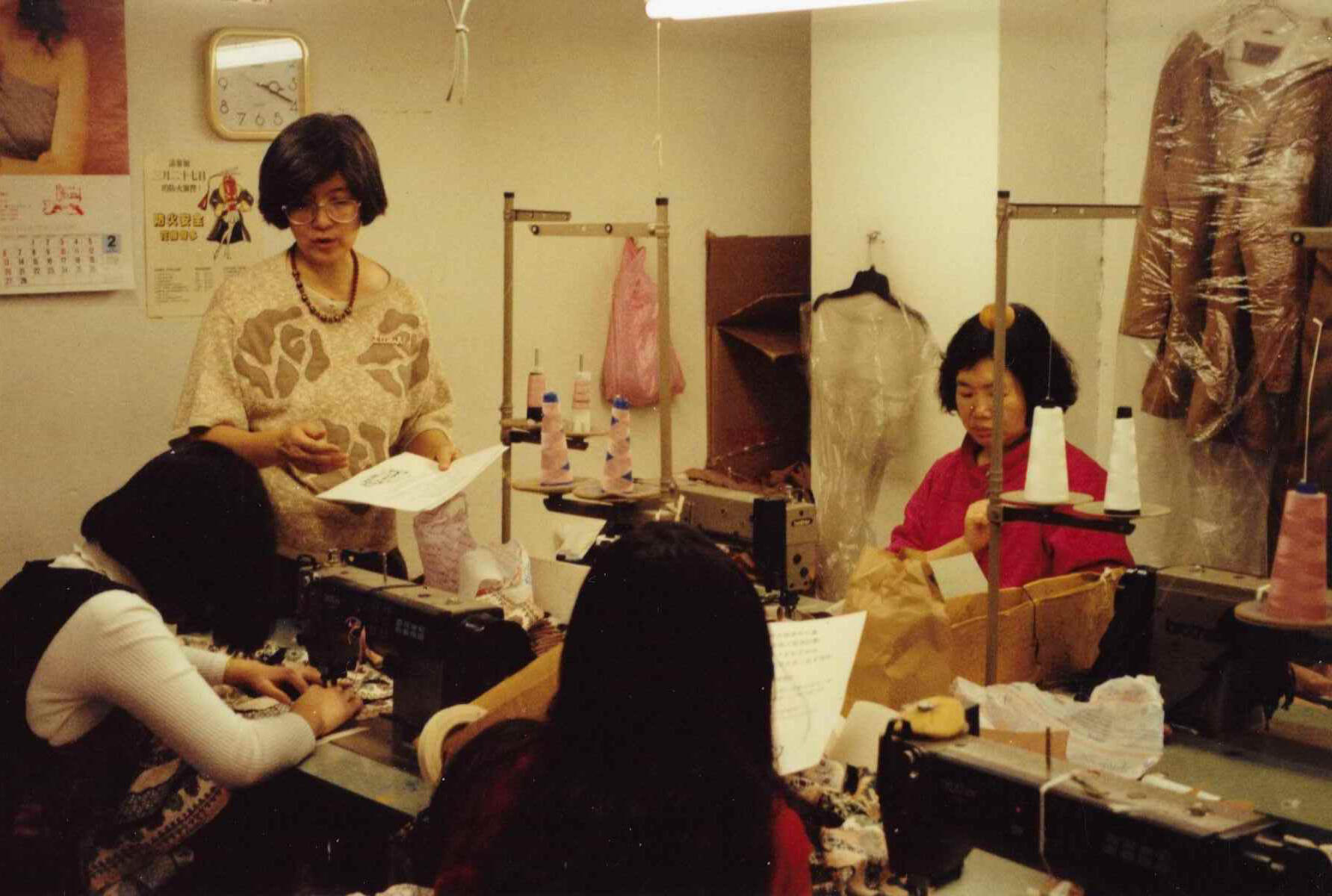
Image: May Chen handing out leaflets announcing information about union activities and benefits to garment workers in 1980s, AAWW
Chinatown Garment Workers' Strike
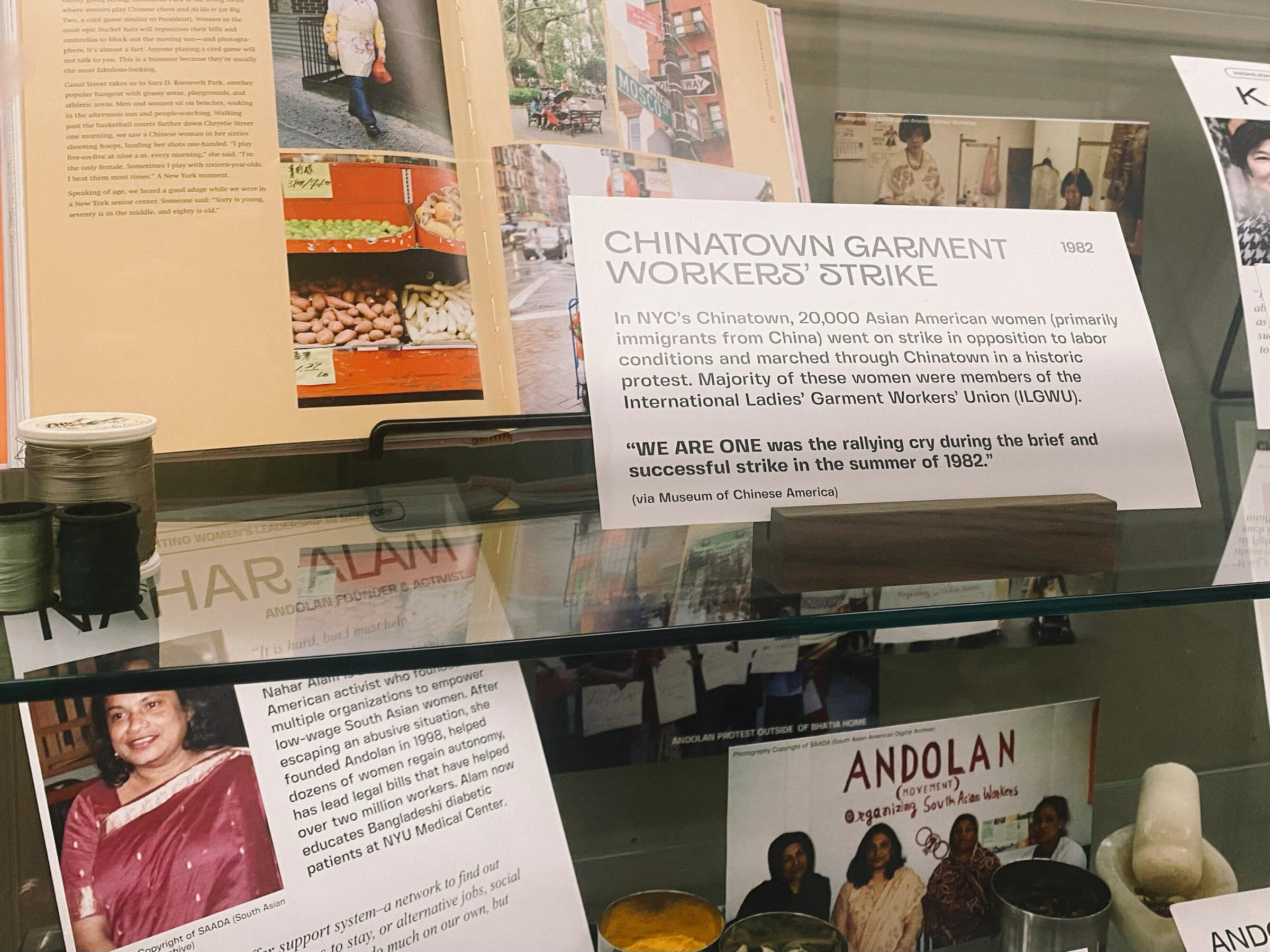
In New York City's Chinatown, 20,000 women, primarily Chinese, went on strike in opposition to labor conditions. The women marched through Chinatown in a historic protest that redefined labor history. Asian women are often stereotyped as docile, and have been viewed as a disposable labor source since their immigration to the USA. This protest not only undermines this portrait, but provides an indisputable example of Asian American women's leadership and courage.
"Thousands upon thousands of Chinese immigrant women garment workers had come together to stand up for themselves. This was a day I had dreamed for, and this rally proved that it could be done…I was extremely proud to be a New York Chinatown garment worker that day" (Quan).
Katie Quan. Memories of the 1982 ILGWU Strike in New York Chinatown. Amerasia Journal, Center for Labor Research and Education, University of California, Berkeley.
Strike Outcomes
After the strike, a contract was signed which improved wages and working conditions. Employers hired bilingual staff so the workers’ needs could be communicated. Childcare was implemented soon after, allowing working mothers to make sure their children were watched over. A free shuttle bus was added between Chinatown and the union office. The strike also shifted Chinatown's community, as more women began to speak out and participate in union action.
"WE ARE ONE was the rallying cry during the brief and successful strike in the summer of 1982” (MOCA).
MOCA TALKS: Reflections on the 1982 Garment Workers Strike
Rachel Bernstein, May Ying Chen, June Jee, and Mae M. Ngai
Film: ILGWU 82 Garment Strike Commemoration, Labor Arts
Filmmaker Betty Yu created a five-minute video capturing the essence of the 1982 strike for the 2021 Triangle Fire Commemoration.
Link to full film.
.
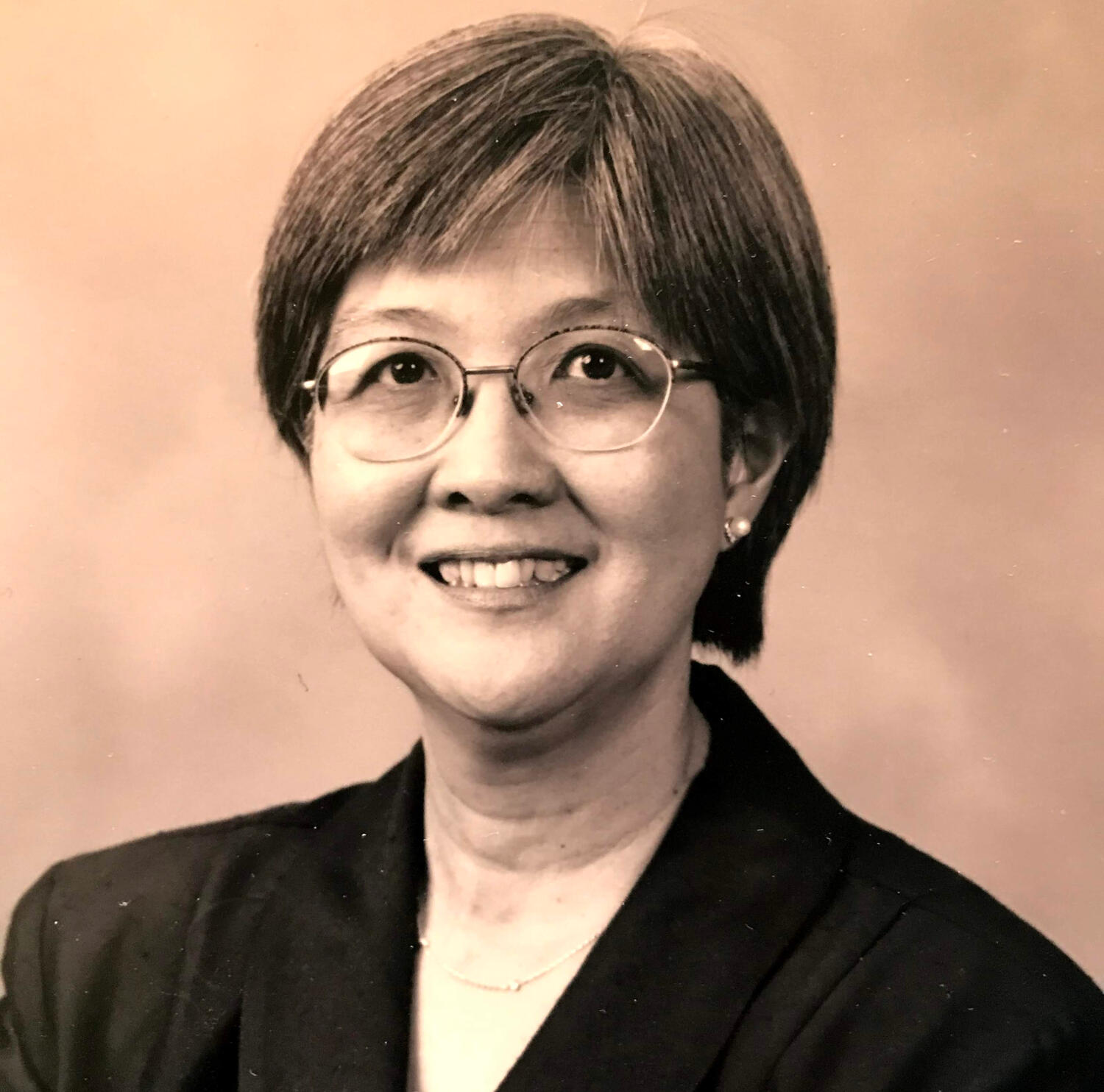
Highlighting Women's Leadership:
May Ying Chen
May Ying Chen is an activist with significant work in labor and immigrant organization. She has done influential work within the ILGWU, and was a co-founder of the Asian Pacific American Labor Alliance (APALA). Chen was a participant in the Chinatown Garment Workers Strike among many other demonstrations for workers’ rights.
An Interview with May Ying Chen
Interview with May Ying Chen conducted by Kashi Nanavati
1. In an exhibit for Stanford, you described witnessing the Chinatown Garment Workers’ Strike as a revelation and inspiration. Can you discuss the impact this strike had on your activist work?
I was already an activist when I moved to New York, but meeting the garment workers and witnessing the strike had a huge impact. I was always interested in the Asian American communities, immigrants, and the role of women. This strike was a concrete manifestation of all those issues in a powerful way. Seeing all those immigrant garment workers rallying together, and seeing radial speeches in Chinese was very inspiring to me. I still feel that impact today.
2. What effect(s) did you notice in Chinatown after the 1982 Garment Workers’ Strike? How did the strike shift ILGWU and other communities in New York?
I had done a lot of work in Chinatown, I grew up in Boston and lived in LA for 10 years and then moved to New York. The Chinatown communities were very old fashioned and patriarchal, as a result of the bachelor society. Most of the immigrants in the 1960s were men, laborers who sent money hone to families. All the traditional Chinatown organizations were run by men, there were rarely any women in them, except to serve tea and clean up. Women were invisible. After the strike, women came out forcefully and had such a strong voice. It began to change the patriarchal structure of Chinatown. More people recognized the role of women in leadership positions.The other piece is that Chinatown is a small business community. In the past there was an anti-labor sentiment, which was changed by the strike. People respected the role the union played, such as improving benefits and training workers. The workers had something to say. The ILGWU has a long culture of social unionism–the intersection of different communities and cultures working together in the union. Many of the chinese workers in the strike were very proud that they put chinese workers into the history of the union.The union realized they had to address the Chinese community’s concerns. For example, many women were marrying and had young children. The issue of daycare and education for children was important. After much advocacy and battles, the union formed a Chinatown childcare. They worked with the CDC for after school and daycare programs that received government funding. There were positive changes within the union. There were many classes, many in chinese, such as civic classes, labor rights classes, ESL classes, and so on. There was training for more workers to be reps.We also had staffers become community liaisons—joint work with many communities in Chinatown. We worked on common campaigns, such as fighting the jail, government benefits, health care benefits, social security benefits, things like that. There were more partnerships between the union and other communities, it was very positive and unifying. A lot of coalition building and working together, which is important for young people today.
"After the strike, women came out forcefully and had such a strong voice. It began to change the patriarchal structure of Chinatown. More people recognized the role of women in leadership positions."
3. Do you have a particularly strong memory from your years of activism? What made this moment stay with you?
I remember doing housing organizing, there were many ups and downs. I was working in New York with tenements, and pressing the city for affordable housing. We fought many battles, and some were not successful. I remember cases in which we would participate in hearings and lobbying, and we lost very badly. Politicians that we thought would support us did not support us in the end. I remember feeling very bent out of shape and discouraged when we would lose campaigns like this. What I learned from that and from working in the union is to sustain your struggles and keep working at it. You can lose battles but still have gains by keeping people organized, and hopefully having success in the next round of organizing.After having stuck with this for so many years and not getting burned out, my advice for young people would be to keep at it and work closely with the people you’re organizing with. I’ve made lifelong friends with workers and people in the union. I’ve retired, but we’re still friends, we get together. We watch each others back. That’s important.
" I’ve made lifelong friends with workers and people in the union. I’ve retired, but we’re still friends, we get together. We watch each others' back. That’s important."
4. Can you speak a bit about your work as co-founder of the Asian Pacific American Labor Alliance? How was the alliance founded and what are some outcomes? How can students get involved?
APALA was formed in 1992, in the year or two leading up to its founding the APALA co-created a planning committee that met over 1-2 years to create bylaws across unions. That was a very exciting process, I remember we were meeting in an APALA meeting room, with these historical leaders who were very Anti Asian—who led fights against Asians in labor movements. We felt like we were making history. In 1992, APALA had its founding convention in DC, and a couple hundred garment workers mobilized in bus loads to get to that convention. The convention provided simultaneous translations into Chinese, it was exciting.
"We felt like we were making history. In 1992, APALA had its founding convention in DC, and a couple hundred garment workers mobilized in bus loads to get to that convention."
Over the years APALA has grown and developed. Sadly my union has lost a lot of its members, this industry has become globalized. By the time I retired there were very few garment workers left in New York compared to the numbers from before. Today there are still a lot of Chinese garment workers in the Garment District, young workers who had the skill to move up in the industry. APALA continued on, it has a large number of teachers, electrical workers, hotel and restaurant workers, industries with a large number of Asian workers.APALA has a membership program that allows people who are not in the union to get involved. I encourage young people to get involved with labor movements. What I learned by working in the union is that even though we have each specific issues, they are not unlike other ethnic groups, African-American, Hispanic, many of us face the same common struggles. Solidarity is a major principle in the labor movements that I think is important for young people to embrace.
"Solidarity is a major principle in labor movements that I think is important for young people to embrace."
5. Can you describe the events and feelings leading up to the strike? How did you and other organizers coordinate 20,000 workers?
No worker really wants to go on strike, they lose their pay and are not entitled to unemployment or types of support. In Chinatown before the strike, most of the employers were aligned with the union contract. It was minority group of holdouts that were anti-union and wanted to get rid of the union. They though Chinese workers, mostly women, would be obedient and loyal to them over the union, a foreign American institution. People were not sure whether ethnic loyalty or worker loyalty would be chosen. Union workers convinced workers that they would lose a lot without the union, which provided workers benefits, such as vacation pay. We could not count on employers to pay for these things. When people look back on this day, we think of going early in the morning to set up the stage for the demonstration, and not knowing if people would show up. At around eight thirty to eight forty five, people still were not sure. Suddenly at nine a.m., workers began to stream into Columbus Park. For me that was a really exciting site. It was very hot in June. To see those workers come into the park, put on their union hats and pick up their picket signs, I’ll never forget that.
"To see those workers come into the park, put on their union hats and pick up their picket signs, I’ll never forget that."
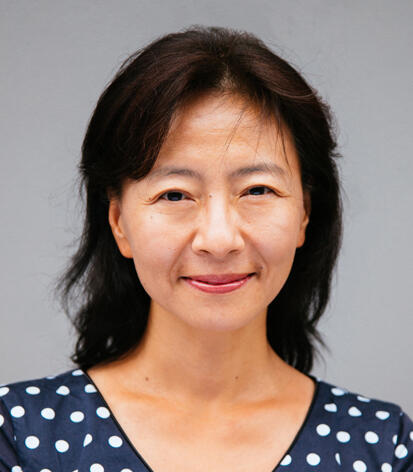
Highlighting Women's Leadership:
Yue Ma
Yue Ma is the Director of Collections and Research Center at the Museum of Chinese in America (MOCA). Ma leads research, conservation, and preservation projects. She assisted with MOCA’s permanent exhibit “With a Single Step,” among other exhibits. At the Shenzhen City Archives Ma priorly worked as a Digital Project Manager and an Associate Research Archivist (via MOCA).
An Interview with Yue Ma
Interview with Yue Ma conducted by Kashi Nanavati
1. Can you talk about your work in collections and research at MOCA? If you could highlight one aspect that you enjoy the most, what would that be?
My work in collections and research at MOCA has been about transforming the museum’s holdings into an accessible, organized, and meaningful resource for the community and researchers. When I first started in 2006, our collections were scattered—in storage rooms, behind office desks, and at two off-site facilities. Over the years, I’ve overseen the process of revamping our Collections and Research Center: consolidating materials on-site, establishing climate control and monitoring systems, creating management policies and cataloging standards, and making thousands of items discoverable both in our database and online.If I had to highlight one aspect I enjoy the most, it would be uncovering and reconnecting stories behind the objects. For example, when we salvaged a noodle company sign decades ago, it was only later through research and donor conversations that we connected two families who each had ties to the business. Situations like that remind me that every artifact carries not just material value but also living memory, and our work helps bridge those histories to descendants, researchers, and the broader public.
"...every artifact carries not just material value but also living memory..."
2. Can you discuss the importance of oral histories and how MOCA engages with, preserves, and exhibits these histories?
Oral histories are an essential part of MOCA’s work because they preserve voices and experiences that might otherwise be lost. Objects and documents provide important evidence, but it is through personal testimony that we gain a fuller understanding of history — the emotions, struggles, and aspirations that shaped people’s lives.At MOCA, we actively engage with oral histories by recording, preserving, and making them accessible through our Collections and Research Center. For example, in preparation for the exhibition Gotta Sing! Gotta Dance! (2002–03), staff conducted interviews with Chinese American performers, creating a rare archive of their stories. These interviews were later used by author Lisa See when she researched Chinese nightclubs for her novel China Dolls (2014), and her support even allowed us to transcribe the entire collection. In addition, oral histories from Chinatown residents following 9/11 helped us document how the tragedy impacted a community located just ten blocks from Ground Zero.By integrating oral histories into exhibitions and research, we ensure that individual voices are preserved alongside artifacts, photographs, and documents. This approach allows us to tell more nuanced stories of the
Chinese American experience and to honor the community members who entrusted us with their memories.
"...it is through personal testimony that we gain a fuller understanding of history — the emotions, struggles, and aspirations that shaped people’s lives."
3. How do you think the 1982 Chinatown Garment Workers’ Strike impacted the broader narrative of Asian American identity presented at MOCA?
The 1982 Chinatown Garment Workers’ Strike represents a pivotal moment in both labor history and Asian American history, and it plays an important role in the broader narrative that MOCA seeks to present. The strike brought together more than 20,000 mostly immigrant women workers who took to the streets to demand fair contracts and better working conditions. Their collective action challenged stereotypes of Asian American women as silent or submissive, instead showing them as powerful leaders of social change.At MOCA, this history resonates strongly with our mission and our collections. Just as we preserve stories of laundries, restaurants, and community businesses, we also document the activism that transformed the lives of Chinatown residents. The strike is not only remembered through photographs or newspaper coverage, but also through oral histories, ephemera, and personal accounts that capture the voices of the women who marched. By bringing these materials into our Collections and Research Center, we ensure that the strike is not seen as an isolated protest but as part of a larger continuum of Chinese American and Asian American struggles for dignity and equality in America. In this way, the strike enriches the museum’s narrative of Asian American identity — one that is resilient, diverse, and deeply intertwined with broader movements for justice.
"The strike is not only remembered through photographs or newspaper coverage, but also through oral histories, ephemera, and personal accounts that capture the voices of the women who marched."
4. Do you have any advice for students interested in museum research and collections?
My advice to students interested in museum research and collections is to approach the work with both rigor and curiosity. Collections management requires strong technical skills — from cataloging and preservation to digital systems and archival standards — but it also requires patience and sensitivity to the human stories behind the objects. Each artifact, whether a garment, a letter, or a family photograph, is part of a larger history, and it is our responsibility to preserve both its physical integrity and its meaning.I would also encourage students to seek out hands-on experience whenever possible. Much of what we accomplished at MOCA — from revamping storage systems to cataloging over 36,000 items — was made possible by the contributions of interns and young scholars. Some of them not only helped organize collections but also used them for their own research, producing essays, dissertations, and public programs that expanded our understanding of Chinese American history.Ultimately, museum research and collections work is about service: to the objects, to the community, and to future generations. For students, cultivating both professional skills and a sense of responsibility to the histories we safeguard will prepare them well for this field.
"Ultimately, museum research and collections work is about service: to the objects, to the community, and to future generations."
Andolan (1998-2012)
What was Andolan?
Andolan (Organizing South Asian Workers) was a community of South Asian women who fought for South Asian immigrant domestic workers. Andolan (meaning “movement” in Bengali) was founded by Nahar Alam in 1998, Queens. They protested against labor abuse and engaged in legal action. Many low-wage workers became key members and activists of Andolan. In addition, they would often provide community programs, such as teaching self-defense classes and english lessons.
Domestic Labor Exploitation
In 1997, Mina Das was working 21 hours per day for $2/hour, as a housekeeper, cook, and nanny in the Upper East Side. Her employers, Mr. and Mrs. Bhatia, confiscated her passport and exploited her for labor. This is one example of many domestic labor abuse cases against immigrant South Asian women. Much of this abuse was by diplomats, who could not be legally charged with any crimes because of their diplomatic immunity.
Andolan’s Impact
Andolan conducted numerous legal battles and settlements against abusive employers, often diplomats with immunity. They led the Diplomatic Immunity Campaign, which held diplomats accountable for abuse. They participated in the campaign for the New York Domestic Workers’ Bill of Rights, which was signed in 2010. It protected over two million domestic workers and legally mandated overtime pay and paid sick days.
"Tell them what? Slavery is done.""What do we want? FREEDOM. When do we want it? NOW."
Andolan Protest Chants. ANDOLAN Organizing South Asian Workers Records, NYU Special Collections.
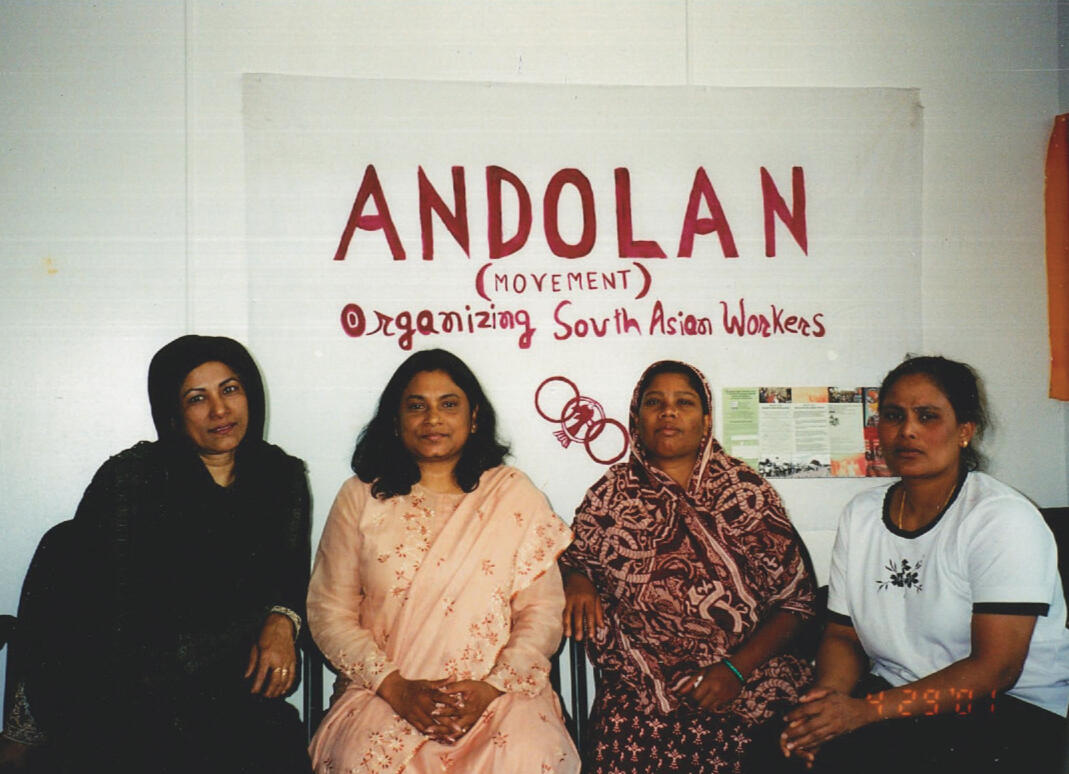
Nahar Alam, pictured second to the left. Image copyright of SAADA (South Asian American Digital Archive)
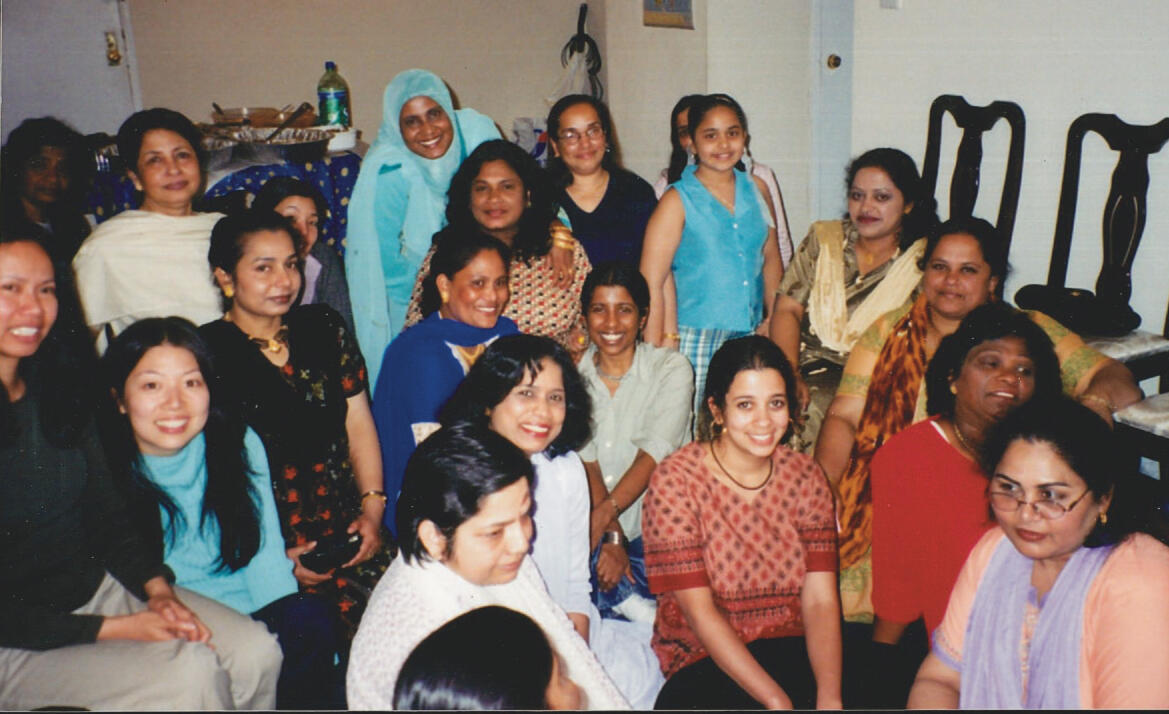
Image copyright of SAADA (South Asian American Digital Archive)
Highlighting Women's Leadership: Nahar Alam
Nahar Alam is a Bangladeshi- American activist who founded multiple organizations to empower low-wage South Asian women. Alam developed a network of South Asian women who would identify and aid those in abusive labor situations. At 13, a police officer blackmailed Alam’s family into agreeing to their wedding. She escaped multiple exploitative situations and founded Andolan in 1998. She has since personally helped dozens of women regain autonomy from employers and has lead legal bills against domestic labor exploitation. Alam now educates Bangladeshi diabetic patients at NYU Medical Center.
“Mainly we offer support system–a network to find out about alternative places to stay, or alternative jobs, social events, friendships... We can’t do much on our own, but together, we can do a lot."“It is hard, but I must help.”
–Nahar Alam, via ANDOLAN Organizing South Asian Workers Records, NYU Special Collections
Film: Claiming Our Voice
CLAIMING OUR VOICE follows members of Andolan, a Queens-based organization founded and led by South Asian domestic workers as a means to support each other and collectively organize against exploitative work conditions. Produced by Jennifer Pritheeva Samuel, Fine Grain Films (New York, NY: Third World Newsreel, 2013). Link to film.
.
Translation Series
The following materials are sourced from Andolan (Organizing South Asian Workers) Records at NYU's Special Collections in the Tamiment Library. Materials include newspaper articles, handwritten letters, photographs, among other primary sources. These materials are originally in Bangla (Bengali), and have been translated to English by Subhalakshmi Gooptu, Professor at SUNY FIT.

Andolan’s Nahar Alam holds a information session and workshop on issues like labor exploitation, domestic violence and others last 31st March.

In New York: Last Sunday, an organized protest by Bangladeshis against police mishandling in Jackson Heights can be seen.

A scene from an organized protest held by community members of the Bangladeshi domestic worker Shamila Begum in front of the Bahrain mission last Friday.
Garment District Rezoning (2025)
FIT’s Backyard
In 1916, the Fifth Avenue Association (comprised of New York's most influential and affluent individuals) zoned the area now known as the Fashion District (Garment District) for garment labor. Much of New York's iconic fashion has been developed by immigrant workers and urban design movements that do not exist elsewhere. The International Ladies’ Garment Workers’ Union (ILGWU) was founded in the Garment District in the early 1900s following the Triangle Factory Fire. Majority of the women in the 1982 Chinatown Garment Workers’ Strike were members of ILGWU, in addition to many other women-led labor movements.
“Patel added that 80% of Met Gala costumes are made by Garment District businesses, which she said shows the cultural importance of the area.”
Stella, Ajani. “Garment District Small Businesses, Unions Fight Against Midtown South Rezoning Plan.” amNY, 1 Aug. 2025.
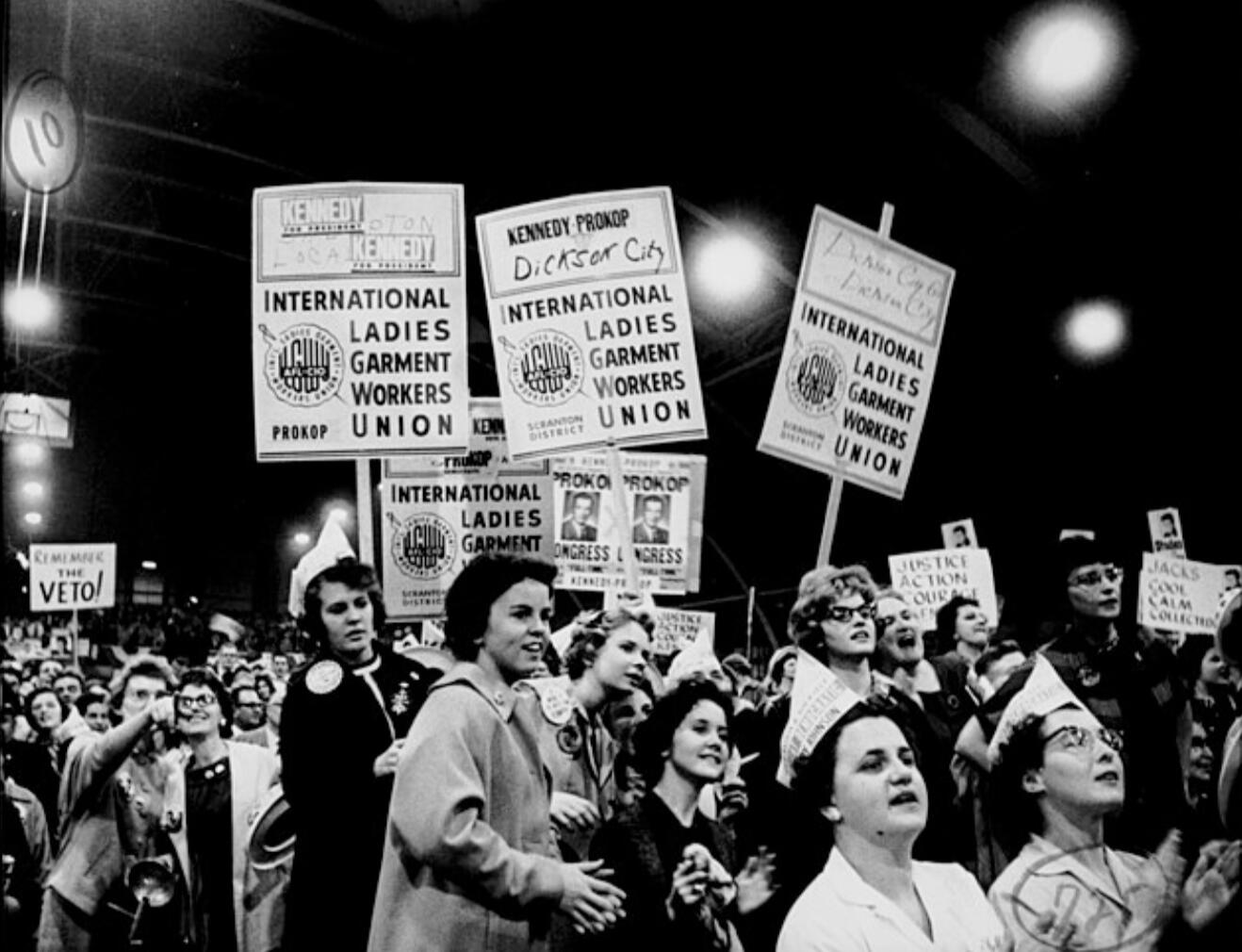
Image: "File: ILGWU union label prominently displayed." Wikimedia Commons. 1960s. Revised 21 May 2024
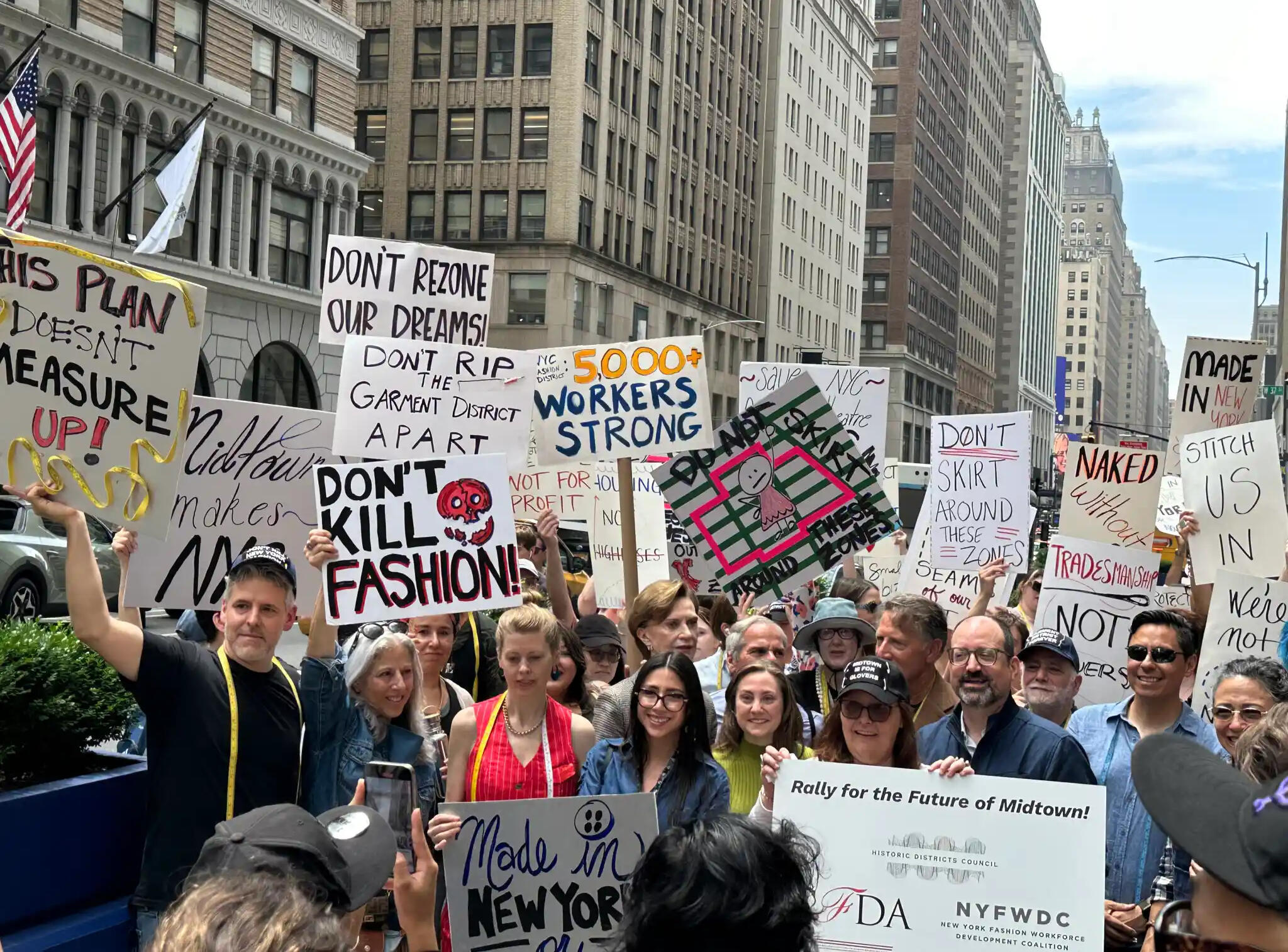
Image: Stella, Ajani. “Garment District Small Businesses, Unions Fight Against Midtown South Rezoning Plan.” amNY, 1 Aug. 2025.
Garment District Rezoning
Currently, NYC is planning to change the Garment District’s zoning to allow for residential buildings in areas that are priorly zoned for garment use. Local unions, businesses, and non-profits are leading a campaign against this rezoning, as the construction of new residential apartment buildings would harm about eight hundred businesses.Pooja Patel is one of the leading voices in this campaign, representing numerous artists and designers. She stated to A.M. New York that “It’s not a matter of being against housing — it’s about taking the community’s concerns into account.”
Your Choices Can Create Change
FIT students are often called “The Future of Fashion” by the university. Consider what you want the future of fashion to look like, not only from a design perspective, but for community and laborers as well. Part of our collective responsibility is to acknowledge and research the immigrant labor that is the backbone to New York’s iconic fashion industry. Out of 75 million total garment industry workers, 73 million are paid below living wages, majority Asian women. We can opt out of fast fashion and micro trends. Learn how to get involved in community organizations, such as NYFWDC, which is advocating on behalf of the Garment industry in the current rezoning protest.
Get involved:
Sources and acknowledgment
This exhibit was created by Kashi Nanavati, under the advisement of Professor Subhalakshmi Gooptu. This exhibit was made possible through the SUNY Dr. L. Eudora Pettigrew Women’s History Research Fellowship.To view the in-person exhibit, visit the Fashion Institute of Technology Library, 227 W 27th St., New York, NY, 10001, Floor 5.
References
1. Yang, Jeff, Phil Yu, and Philip Wang. Rise: A Pop History of Asian America from the Nineties to Now. Harper, 2022.2. Takaki, Ronald T. Strangers from a Different Shore: A History of Asian Americans. Penguin Books, 1990.3. “Quong Yuen Shing & Co. at 32 Mott Street.” Collections. Museum of Chinese in America, 12 Sept. 2019, www.mocanyc.org/collections/stories/quong-yuen-shing-co-at-32-mott-street/4. Neogi, Ayushi. “How Does it Feel to be a Solution?: How South Asian Migration from 1885 to 1923 Created a Modern South Asian “Other” Used to Promote Conservative Rhetoric.” Hastings Constitutional Law Quarterly, UC Law SF, repository.uclawsf.edu/cgi/viewcontent.cgi?article=2140&context=hastingsconstitutionallawquaterly.5. Atoigue, Zeta. “Day 216: Little India, Jackson Heights, New York.” APIA Every Day, 17 Oct. 2024, apiahip.org/everyday/day-216-little-india-jackson-heights-new-york.6. “Jackson Heights: Unearthing the People’s Struggle.” Asian American Writers’ Workshop, aaww.org/jackson-heights-unearthing-the-peoples-struggle/.7. “The Chinatown Garment Strike of 1982.” Asian American Writers’ Workshop, aaww.org/chinatown-garment-strike-1982/.8. Wu, Connie. “Asian American Labor: Women Workers.” Ms. Magazine, 30 Aug. 2023, msmagazine.com/2023/08/30/asian-american-labor-women-workers/.9. Quan, Katie. “Labor’s Untold Story: Asian Immigrant Women in the Garment Industry.” Berkeley Labor Center, 2009, laborcenter.berkeley.edu/pdf/2009/quanamerasia09.pdf.10. “How the Asian American–Led 1982 Garment Strike Shaped Three Decades of Labor Activism.” Prism, 8 June 2021, prismreports.org/2021/06/08/how-the-asian-american-led-1982-garment-strike-shaped-three-decades-of-labor-activism/.11. “MOCA Talks: 1982 Strike.” Museum of Chinese in America, www.mocanyc.org/event/moca-talks-1982-strike/.12. “NYU Andolan (Organizing South Asian Workers) Records.” New York University, NYU Special Collections.13. “History.” Garment District Alliance, garmentdistrict.nyc/history.14. Rosenberg, Zackary. “Garment District Small Businesses, Unions Fight Rezoning Plan.” AM New York, 22 Mar. 2018, www.amny.com/news/garment-district-small-businesses-unions-fight-rezoning-plan/.15. “Global Fashion Industry Statistics.” Fashion United, fashionunited.com/statistics/global-fashion-industry-statistics.
Image and Video Citation
1. Portrait of the Tape family (left to right): Joseph Tape, Emily Tape, Frank Tape, Mamie Tape, and Mary Tape, c. 1884. History.com.2. Jackson Heights, Global Town Square. New York Times.3. Film: "WE ARE ONE", c. 1982. Labor Arts. https://www.youtube.com/watch?v=6H1oHUtVVAc4. Local 23-25 Unite! 100 Years sign. Catalog Number 2007.014.002. https://mocanyc.pastperfectonline.com/webobject/C5A8259E-AA20-4832-8A7E-4746702484505. May Chen handing out leaflets announcing information about union activities and benefits to garment workers in 1980s. AAWW. w.org/chinatown-garment-strike-1982/6. Film: ILGWU 82 Garment Strike Commemoration, Labor Arts. https://www.youtube.com/watch?v=9KJFvpZ9YEw7. Andolan. Alam, Nahar. Andolan Protest. SAADA. https://www.saada.org/item/20190806-58898. Andolan (Organizing South Asian Workers). Andolan Meeting. NYU Tamiment Library, Special Collections.9. Andolan. Alam, Nahar. Group of women seated with chairs. SAADA. https://www.saada.org/item/20190806-589510. Film: Jennifer Pritheeva Samuel, & Fine Grain Films (Producers), & . (2013). Claiming Our Voice. [Video/DVD] Third World Newsreel. Retrieved from https://video.alexanderstreet.com/watch/claiming-our-voice11. Groups rallied against the rezoning plan for Midtown South. (2025). amNY. https://www.amny.com/news/garment-district-small-businesses-unions-fight-rezoning-plan/12. "File: ILGWU union label prominently displayed." Wikimedia Commons. 1960s. Revised 21 May 202413. Groups rallied against the rezoning plan for Midtown South (2). (2025). amNY. https://www.amny.com/news/garment-district-small-businesses-unions-fight-rezoning-plan/